


Given that they’re both rehabilitative specialties, occupational therapy and physical therapy are often mistaken for one another. Professionals in either field focus on helping people recover from injuries, manage certain conditions, and be able to navigate daily living. However, they couldn’t be more different from one another.
For instance, a stroke can impact more than just a person’s ability to walk from point A to B. It can also make everyday activities like getting dressed or using a spoon challenging. While both difficulties can be rehabilitated, the type of therapy will depend on which abilities have been affected.
So, what exactly makes occupational therapy different from physical therapy? More importantly, how do you determine which therapy your patient may need?
What Is Occupational Therapy?
Occupational therapy (OT) is a specialty that helps patients develop, maintain, or recover their ability to perform simple daily activities, such as lifting a spoon or changing clothes.
If you have a patient who recently suffered a hand injury, the injury itself will eventually heal with all the necessary medical interventions. However, they may still find tasks that require fine motor skills challenging. In this case, an OT will work with this patient to help them regain their ability to perform these activities.
However, OTs also handle more than just rehabilitating physical injuries. They can also treat patients with developmental disabilities or neurological conditions so they can be independent and functional.
What Is Physical Therapy?
On the other hand, physical therapy (PT) is focused on helping a patient regain their normal ability to move following an injury or medical condition that has affected it.
For example, a patient going in for a knee replacement surgery will likely find it difficult to walk even after recovery as they adjust to their new joint and recover from surgery. In this scenario, a PT will recommend exercises that gradually improve the movement of the affected knee while strengthening the muscles that support it.
Depending on how well the patient responds to the recommended treatment, the exercises may be adjusted to help them improve their mobility and regain as much independence as possible
Occupational Therapy Vs Physical Therapy: What Are the Main Differences?
When comparing PT vs. OT, the main distinction is what each profession aims to accomplish through rehabilitation. While both occupational and physical therapists help patients improve their ability to function, their treatment goals aren’t necessarily the same.
Here’s how the two compare:
| Areas of Comparison | Occupational Therapy | Physical Therapy |
| Primary focus | Performing everyday activities independently | Improving physical movement and mobility |
| Common goals | Developing daily living skills and improving participation in activities | Restoring strength, flexibility, balance, and range of motion |
| Treatment methods | Activity-based exercises, adaptive techniques, and environmental modifications | Therapeutic exercises, movement training, and manual therapy |
| Common patients | People with physical, cognitive, sensory, or developmental difficulties | People with injuries, movement disorders, chronic pain, or mobility limitations |
| Examples of activities | Dressing, eating, writing, cooking, and working | Walking, climbing stairs, standing, and improving joint movement |
However, these differences don’t mean that occupational therapists never address mobility or that physical therapists only work on walking and exercise. In fact, one of the occupational therapy and physical therapy similarities is that both professions can address overlapping physical limitations, although their treatment goals may differ.
Treatment Goals
When examining the differences between physical therapy and occupational therapy, one of the first things you should consider is what your patient is trying to accomplish through treatment.
The treatment goals will largely depend on how the patient’s condition has affected their daily life. Someone recovering from a fractured ankle may need physical therapy so they can walk without difficulty. But if the injury has also made daily responsibilities difficult, an occupational therapist can step in and help find ways for them to perform these activities during and after recovery.
Treatment Methods
The treatments provided by occupational and physical therapists may involve similar exercises, although how they’re used will depend on the patient’s rehabilitation goals. This is another area where the physical therapy and occupational therapy differences become more apparent.
Physical therapy commonly involves exercises that improve strength, flexibility, balance, and coordination. Depending on the condition being treated, a physical therapist may also use manual techniques or guide the patient through movements that have become difficult following an injury.
Exercises aren’t exclusive to physical therapy, either. Occupational therapists also use them when working with patients who have difficulty controlling their hand movements, especially if these limitations prevent them from performing activities that require precise movements.
Apart from exercises, occupational therapists may also work directly with patients on activities they find difficult to perform. For example, someone with arthritis may need to learn a different way of holding kitchen utensils or use equipment that makes preparing meals less painful.
Can Patients Receive Occupational Therapy and Physical Therapy at the Same Time?
Yes. Depending on their condition, patients may receive both occupational therapy and physical therapy as part of their rehabilitation plan.
This is often the case for patients recovering from a stroke, especially when their condition has affected more than just their mobility. Apart from having difficulty walking, they may also struggle with activities like getting dressed or feeding themselves because they’ve lost some control over their movements.
In such cases, you may recommend physical therapy to help address their mobility problems while an occupational therapist works with them on regaining the skills they need to take care of themselves. Both therapies can be provided alongside each other, although the treatment approach will depend on the patient’s condition and how much assistance they require.
How Do You Determine Which Therapy Your Patient Needs?
Before recommending either therapy, you should consider the patient’s diagnosis, the limitations they’re experiencing, and how these difficulties affect their ability to function.
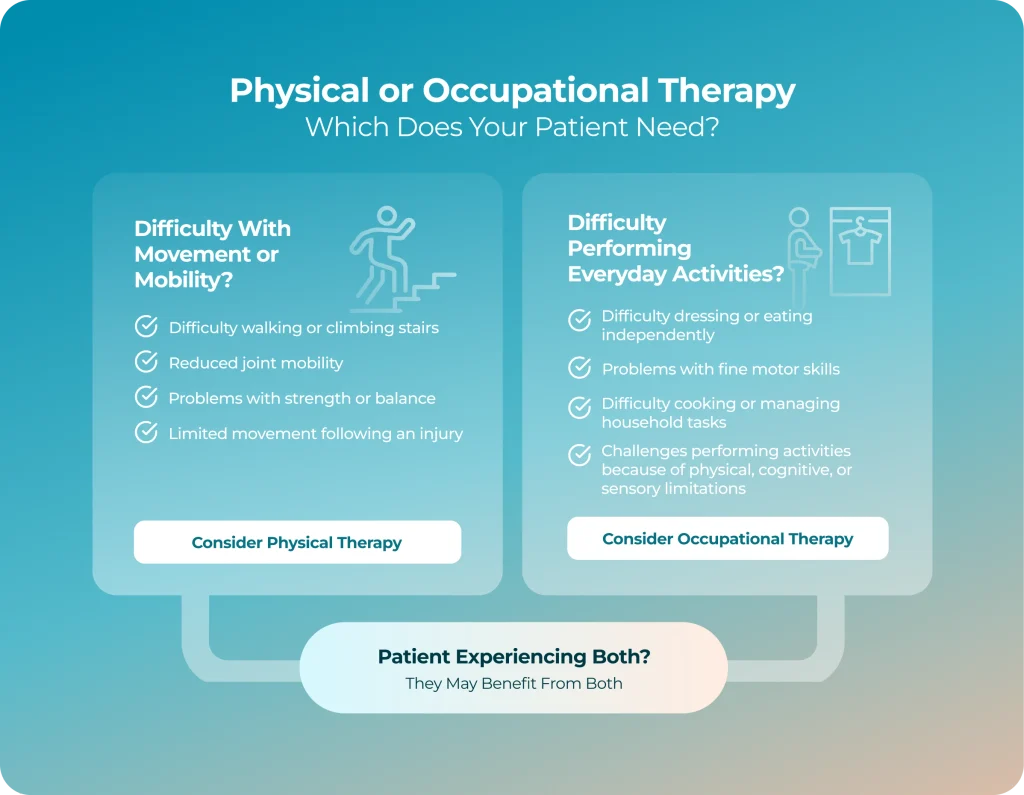
If your patient’s primary concern involves movement, such as difficulty walking or reduced joint mobility, physical therapy may be the more appropriate option. However, if they’re struggling with activities like dressing, eating, or managing household responsibilities, occupational therapy may be worth considering.
There may also be situations where the distinction isn’t immediately clear. For instance, a patient with a shoulder injury could have difficulty moving their arm while also struggling with activities that require reaching or lifting objects.
In cases like this, an evaluation by the appropriate rehabilitation professional can help determine which services are necessary. If both movement and daily living activities have been affected, a combination of occupational therapy and physical therapy may be recommended.
Make Managing Your Rehabilitation Practice Easier
Running a rehabilitation practice also involves administrative responsibilities that don’t necessarily require the attention of your clinical staff. For instance, a medical virtual assistant can help verify patients’ insurance coverage and follow up on prior authorizations so your team can concentrate on providing the recommended therapies.
If you’re considering hiring additional administrative support, My Mountain Mover can help you find a medical VA with experience handling the responsibilities you want to delegate. Book a 10-minute discovery call today to learn more.

Frequently Asked Questions
What Is the Difference Between OT and PT?
The main difference between OT and PT is their primary focus during rehabilitation. Physical therapy generally addresses a patient’s ability to move, while occupational therapy focuses on helping them perform activities that have become difficult because of their condition. However, both services may be recommended when a patient has limitations affecting several aspects of their daily life.
How Do Physical Therapy and Occupational Therapy Differ in Their Approach to Treatment?
Physical therapists generally work on improving a patient’s physical movement through exercises and other rehabilitation techniques. Occupational therapists may also use exercises, but their treatment approach considers how the patient’s condition affects their ability to perform daily activities and whether alternative techniques or equipment are necessary.
Occupational Therapist Vs Physical Therapist: Can They Treat the Same Patient?
Yes. Patients with conditions that affect both mobility and daily living activities may benefit from receiving treatment from occupational and physical therapists. Although their responsibilities may overlap, each professional can address different rehabilitation goals based on the patient’s condition and the difficulties identified during assessment.
Is Occupational Therapy Only Recommended for Patients With Physical Disabilities?
No. Occupational therapy can also benefit patients with cognitive, developmental, and sensory difficulties that affect their ability to participate in everyday activities. For example, children with developmental conditions may receive occupational therapy to improve their fine motor skills or develop strategies for managing activities at home and school.
Do Occupational Therapists and Physical Therapists Have the Same Qualifications?
No. In the United States, physical therapists generally need to complete a Doctor of Physical Therapy (DPT) program, while occupational therapists can qualify through an accredited master’s or doctoral program in occupational therapy. Both professions also have separate licensing requirements, meaning a professional qualified in one field isn’t automatically authorized to practice the other.
Can Patients Receive Occupational Therapy at Home?
Yes. Depending on the patient’s condition and the availability of services, occupational therapy may be provided in their home. This can be particularly useful when treatment involves assessing how patients perform activities in their usual environment or determining whether modifications are necessary to help them manage their daily responsibilities.
Does Insurance Cover Occupational Therapy and Physical Therapy?
Many health insurance plans cover occupational therapy and physical therapy when the services meet their requirements for medical necessity. However, coverage limitations, prior authorization requirements, and the number of covered sessions can vary depending on the payer and the patient’s insurance plan. Your practice should verify these details before treatment to determine whether additional documentation or authorization is required.