


Contrary to popular belief, getting a doctor’s appointment takes more than just finding an open date and booking it. According to AMN Healthcare’s 2025 Survey of Physician Appointment Wait Times, patients tend to wait an average of 31 days, or a month, for their scheduled appointments across 15 major U.S. metropolitan areas. Ideally, patients shouldn’t have to wait that long, but what’s concerning is that this figure is actually a 19% increase from 2022.
For most practices, several factors can influence how long patients have to wait. However, what your practice does with its available appointments also matters. If there are cancellations, they should be addressed promptly. If multiple doctors have different schedules, they should be organized in a way that allows efficient scheduling to still be possible. If your patient demographic is varied, your practice’s scheduling approach should make sure that patients are matched with the right type of provider and visit.
This is where a medical scheduler comes in.
What is a Medical Scheduler?
A medical scheduler manages patient appointments and keeps provider schedules organized. However, they do more than just find and fill a vacant time slot; medical schedulers consider factors like patient needs, provider availability, and more when efficient scheduling is the goal.
When scheduling an appointment, a medical scheduler takes into account what the patient needs before choosing an available time because the type of visit can determine how much time should be reserved, which provider they should schedule the patient with, and whether or not there are any requirements they must prepare beforehand.
By working with a medical scheduler, you give your patients someone who will help them navigate these considerations while you maximize your calendar. And because they are the point of contact for patients booking an appointment, they are one of, if not the first, part of the entire patient journey.
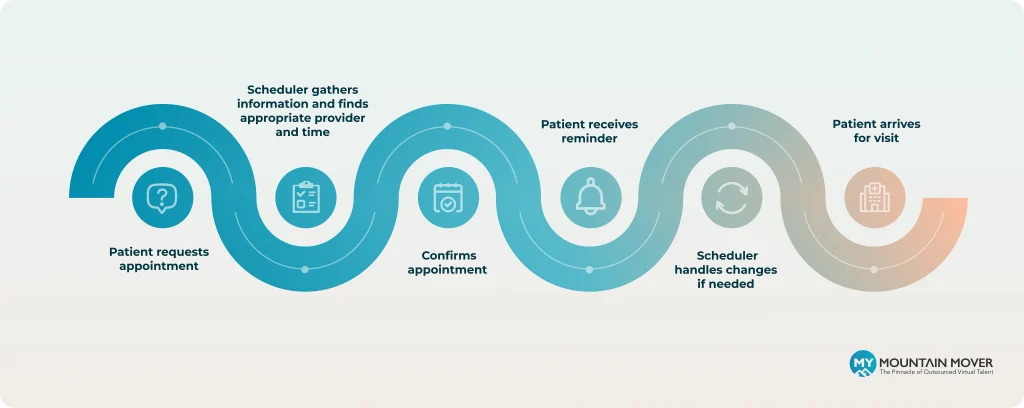
What Does a Medical Scheduler Do?
The exact responsibilities of a medical scheduler will depend on your specialty and workflow. However, their typical responsibilities include:
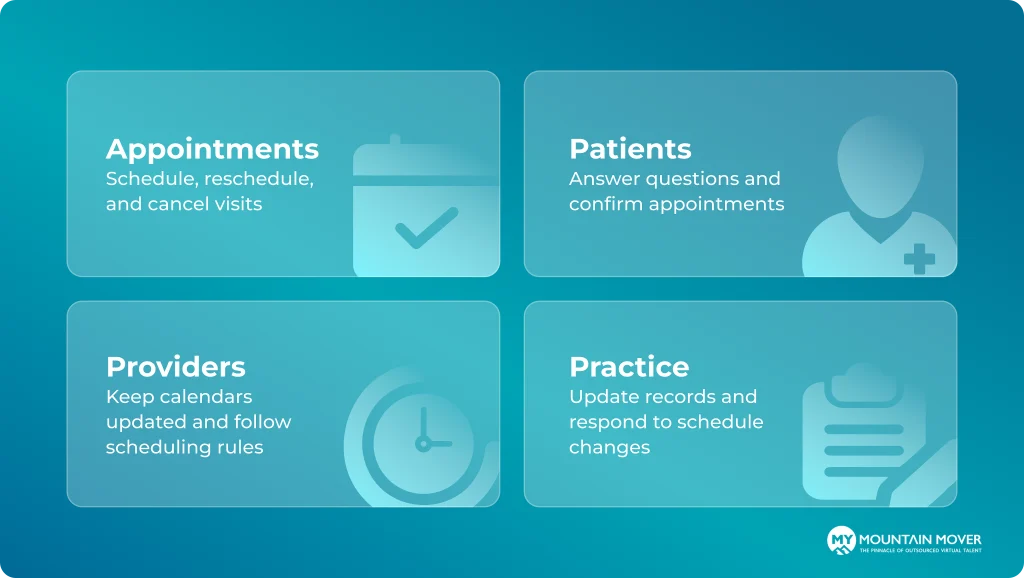
Why is Medical Scheduling Important?
Your practice’s schedule makes or breaks its productivity. If it is organized, you can maximize available appointments and keep wait times to a minimum, making care more accessible.
In recent years, the healthcare industry has adopted self-scheduling systems where patients don’t have to interact with a person to book their preferred doctor’s appointment. However, such technology hasn’t done away with the need for an actual medical scheduler because, according to an MGMA poll, only 11% of medical group leaders said a majority of their patients used digital tools to schedule appointments.
Patients may still have questions, need help determining the right type of appointment, or have circumstances that don’t fit neatly into an online scheduling tool. Having someone responsible for these situations can help keep your schedule organized without making patients navigate them on their own.
Should You Hire a Medical Scheduler?
While medical schedulers are beneficial to practice productivity, every practice is unique. If your practice has a smaller patient volume, your receptionist or another administrative staff member may be able to manage appointments. However, hiring a medical scheduler is worth considering if these sound familiar to you:
✓ Patients frequently wait on hold to schedule appointments
✓ Your front desk struggles to manage calls and in-person patients at the same time
✓ Cancellations regularly leave unused appointment slots
✓ Providers frequently deal with scheduling questions themselves
✓ Your practice manages multiple providers or complicated scheduling rules
✓ Appointment requests are taking time away from other responsibilities
If several of these sound familiar, separating scheduling from your team’s other responsibilities may help keep your workflow more organized.
What Qualities Should a Medical Scheduler Have?
Because medical schedulers communicate directly with patients, strong communication and customer service skills are important. They should be able to explain available options clearly, listen to patient concerns, and remain professional when schedules become difficult to accommodate.
Attention to detail is equally important. Scheduling the wrong appointment type, provider, or length can disrupt your workflow and create unnecessary inconvenience for both patients and staff.
Your ideal medical scheduler should also be comfortable using EHRs, practice management systems, phone systems, and other technology involved in your scheduling process.
Organization and time management are also critical to medical schedulers, especially if your practice has multiple providers or a high appointment volume. A medical scheduler should be able to keep track of changing schedules and prioritize requests without losing sight of the details that keep the day running smoothly.
Should Your Medical Scheduler Work In-Person or Virtually?
Medical scheduling is one of several healthcare administrative roles that can be performed either inside your practice or remotely.
If the role regularly involves responsibilities that require someone to be physically present, an in-person medical scheduler could be beneficial. However, since most scheduling tasks are handled over the phone or through online systems, a virtual medical scheduler can perform many of the same responsibilities and may even be more beneficial because they eliminate the need for a dedicated working space within your practice.
Your virtual scheduler can manage appointments, communicate with patients, and keep provider calendars organized remotely while your in-house team focuses on responsibilities that require their physical presence.
How Can You Hire a Medical Scheduler?
Once you’ve decided what type of medical scheduler your practice needs, the next step is deciding how you’ll hire one.
Online job sites give you control over the recruitment process. You can publish your opening, review applications, screen candidates, and choose who you want to hire. However, you’ll also be responsible for onboarding your new employee and handling their employment requirements.
Alternatively, medical virtual assistant (VA) companies like My Mountain Mover (MMM) recruit, screen, and match HIPAA-trained remote professionals with healthcare practices like yours. Agencies like MMM provide onboarding support, HR, account management, and IT support after your medical scheduler joins your team.
Whichever option you choose, focus on finding someone who can manage your schedule accurately while communicating well with your patients and staff. After all, your schedule doesn’t just determine how your day is organized. It also affects how patients access your practice.
Find Your Practice’s Ideal Virtual Medical Scheduler
Managing appointments shouldn’t have to take time away from your in-house team and their other responsibilities. With the right virtual medical scheduler, you can give patients the support they need while keeping your providers’ calendars organized.
My Mountain Mover can help you find a healthcare-trained VA whose skills and experience match the needs of your practice. Schedule a free consultation today to find your ideal VA.

Frequently Asked Questions
Do medical schedulers need a degree or certification?
There are certifications that candidates can take and add to their resume to set themselves apart from other candidates. But from a practical standpoint, relevant experience or familiarity with how healthcare practices work matters more than degrees or certifications.
Is a medical scheduler the same as a medical receptionist?
Not necessarily. A medical scheduler primarily focuses on managing appointments and provider calendars, while a medical receptionist may handle a broader range of front desk responsibilities, such as greeting patients, answering calls, collecting paperwork, and coordinating office activities. However, the two roles can overlap depending on the practice.
Does a medical scheduler handle insurance verification?
They can, depending on how your practice divides its administrative responsibilities. Some medical schedulers may verify insurance information or collect basic coverage details when scheduling an appointment, while other practices assign insurance verification to a separate employee.