

A dental recall system is only as useful as the person running it. Most practice management software tracks which patients are due for their next cleaning, but when nobody works that list every day, overdue patients drift further out and hygiene chairs sit empty.
Closing that gap takes a system built around daily ownership, consistent follow-up, and tracking. You need someone who manages the recall list and keeps overdue patients on track. A dedicated medical virtual assistant can take on that role, serving as a HIPAA-compliant member of your team. Understanding how to build an effective recall system and how to choose a reliable medical virtual assistant is essential.
What Is a Dental Recall System?
A dental recall system is the process dental practices use to track patients who are due or overdue for their next cleaning and exam. It’s also called “recare” and often involves using management software to follow up with patients and track their dentist-set due dates.
There’s no consensus on an ideal recall frequency. However, a recall system does more than keep schedules organized. Prescheduling patients before they leave improves office productivity, and accurate recall intervals ensure reliable overdue reports. Without it, chairs sit empty. Patients who don’t rebook before leaving often delay returning until they’ve lapsed.
An effective system is essential. According to the ADA Health Policy Institute, one-third of dentists say they could treat more patients than their current schedule allows. Meanwhile, 12% reported being too busy to treat all patients.
How to Build an Effective Dental Recall System
Building an effective dental recall system comes down to a few consistent habits, repeated daily:
- Schedule next appointments before patients leave: Book the next hygiene visit while the patient is still at the office. Then, send reminders shortly before that next appointment.
- Work through overdue, unscheduled, and lapsed lists: Pull reports on overdue recare patients and unscheduled treatment, then reach each one through their preferred method. A virtual dental administrative assistant can handle this follow-up.
- Assign ownership and a routine: Designate one team member to run monthly overdue patient reports and stay on top of patient scheduling to keep operations from stalling.
- Create a consistent contact sequence: Reminders by phone, mail, or message are allowed under HIPAA, but keep voicemails brief and log every contact attempt.
- Keep a short-notice list ready: Strong predictors of no-shows include missed confirmation messages, long lead times between booking and appointment dates, and a history of missed visits. A backup list of patients who may need recare on short notice helps fill gaps.
- Check insurance frequency limits: Dental plans typically cover only a limited frequency of services annually. Medical virtual assistants can verify insurance coverage before booking.
- Keep track of useful metrics: Monitor the size of your overdue list, recall visits, reactivated patients, and unfilled hygiene hours to confirm whether your dental recall system works.
What Makes Dental Recall Systems Ineffective
Even a well-built dental recall system stalls when there’s no time to run it. More than half of dentists point to staffing shortfalls as a leading challenge, and rising overhead compounds the problem by stretching already-thin teams further. With fewer hands to make calls and a schedule already booked months out, there’s rarely room left to squeeze overdue patients. Admin workload also diverts attention from patient care and contributes to inconsistent scheduling.
How a Medical Virtual Assistant Keeps Your System Active
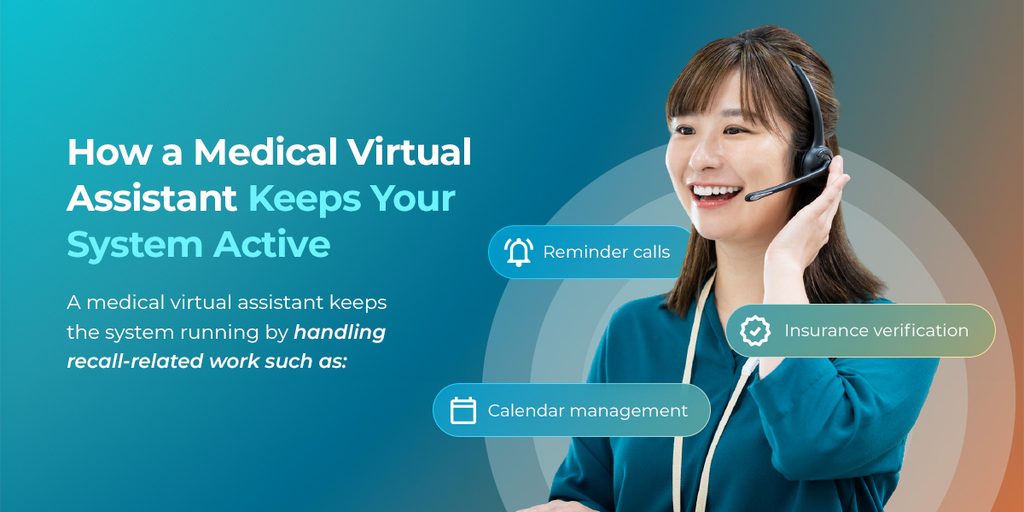
A medical virtual assistant keeps the system running by handling recall-related work such as reminder calls, insurance verification, and calendar management. With someone taking ownership of the system, practices tend to have more consistent recalls and fewer gaps. Same-day openings are also filled faster. In-office staff can focus on hands-on clinical work without chairside time being interrupted by calls and confirmations.
However, handing off administrative work still requires protecting patient data in accordance with HIPAA. Any outside party handling protected health information generally requires a written agreement that limits how that data is used. Those rules apply the same way whether the person answering the phone works down the hall or logs in remotely.
What to Look for in a Dental Medical Virtual Assistant
It’s best to work with a medical virtual assistant who understands the appropriate workflows. When evaluating each one, consider the following:
- Medical virtual assistant training: Look for a professional who’s trained in scheduling and coordination, insurance and billing, and documentation.
- Strong interpersonal and organizational skills: Prioritize candidates with strong attention to detail, listening skills, and organizational habits, especially since they’ll be working with patients.
- Coverage during business hours: Since you’re hiring remotely, the candidate should align with your normal business hours, when patients can actually answer.
Frequently Asked Questions
When determining how to create an effective recall system and choose a reliable medical virtual assistant, dentists and managers typically ask the following:
How can a dental assistant convince patients of the importance of oral hygiene?
A dental assistant can convince patients of the importance of oral hygiene by explaining what’s at stake. Cavities and gum disease are preventable with professional care and daily self-care, yet some oral conditions show no pain or visible signs until they’ve progressed. For patients with diabetes, poor gum health is also linked to worse blood sugar control, which raises the stakes.
Patients may respond better when recare visits are framed as prevention rather than a routine checkbox. This approach helps them see why showing up consistently supports their broader health, not just their teeth.
How does virtual dentistry work?
Virtual dentistry, or teledentistry, works through two main formats:
- Synchronous care: Synchronous care happens live over two-way audio and video, similar to a video call with your dentist.
- Asynchronous care: Also called “store-and-forward care,” asynchronous care involves securely sending records such as X-rays and photos for a dentist to review later.
Both care formats complement in-person care for patients facing distance, work schedule, or mobility barriers rather than replace it.
Find Experienced Medical Virtual Assistants With My Mountain Mover
My Mountain Mover has supported more than 1,000 healthcare practices since 2020 with healthcare-trained, HIPAA-compliant medical virtual assistants. More than 72% of clients stay on as long-term partners. Every medical virtual assistant works under a signed business associate agreement, backed by quarterly HIPAA refreshers and support from an in-house compliance officer, so recall outreach remains protected even when the work is done remotely.
A flat, all-inclusive rate covers salary, benefits, payroll, and IT support. You can identify suitable candidates in 48 hours. By working with a medical virtual assistant, many practices save up to 70% compared with hiring in person. Get a free consultation today or call (909) 610-9793 to keep your hygiene schedule full.