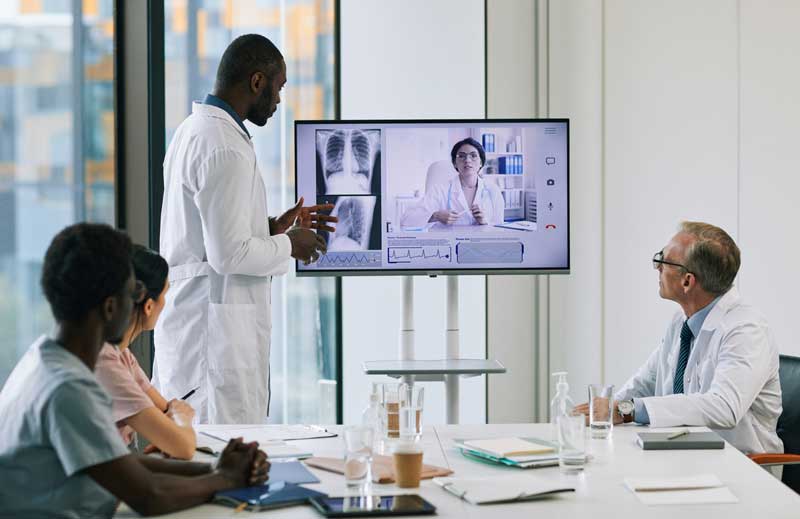


Despite how promising virtual care delivery has proven to be in the last few years, a white paper from the National Institute of Standards and Technology (NIST) states that expanding it beyond traditional clinical environments can be risky because in such settings, healthcare information systems operate in environments outside of your direct control. Regardless, the integration of remote workers in the care delivery model is becoming more common across the industry, making the protection of patient data more critical than ever.
Whether your practice is working with remote employees, such as medical virtual assistants (VAs) or other administrative staff, understanding where your practice’s risks exist is one of the first steps toward maintaining HIPAA compliance.
So, how do you conduct a HIPAA risk assessment for remote work?
Why Does Remote Work Change Your HIPAA Risk Assessment?
Every healthcare practice has a responsibility to protect patient information. However, that responsibility becomes more complex once members of your team begin working outside your practice.
If everyone in your team works inside your practice, you tend to have more control over the equipment they use to do their work, who they collaborate with, and where or how protected health information (PHI) is accessed. But when even just one of them starts working outside, that level of oversight starts decreasing, extending your responsibility of keeping patient data secure to beyond your practice’s walls.
Instead of evaluating only your internal systems, your practice also needs to consider the technology, internet connections, and work environments your remote employees use every day. That doesn’t mean remote work is risky by default, but that how you assess your HIPAA risks should reflect the way your team actually works.
By understanding where PHI could likely be exposed, you can implement security practices that help you be more productive without putting your patients’ data at risk.
What Should You Evaluate During a HIPAA Risk Assessment?
Every healthcare practice operates differently, whether it’s through patient demographics or how the team operates. For this reason, your HIPAA risk assessment approach should reflect your actual workflow, the technology you use, and your staffing model.
Remote Devices
If your team members access PHI from outside your practice, the device they use should be a part of your practice’s security environment. Whether they use a laptop that you provided for them or one that they secure themselves, it should be protected in the same way you protect the devices within your practice.
Password protection, encryption, antivirus software, operating system updates, and the ability to remotely disable lost devices are all safeguards you should consider implementing because they help reduce the risk of unauthorized or malicious access.
Internet Connections
As the name suggests, remote work involves accessing data through a virtual employee’s own internet connection. Since this network is fully beyond your control, you should also take it into account in your HIPAA risk assessment, particularly how PHI travels between your practice and your virtual team member.
While you can’t have full control over the connection itself, you can require your virtual staff to implement security best practices, such as encrypted connections and virtual private networks (VPNs), both of which are very effective in protecting sensitive information.
User Access
Not every team member needs access to every part of your system. As your practice grows, responsibilities often change. Staff may take on new tasks, move into different roles, or stop performing certain responsibilities altogether. Because of this, reviewing user permissions should be part of your HIPAA risk assessment.
Your practice should make sure team members only have access to the information they need to perform their jobs. Individual user accounts, strong passwords, and multi-factor authentication can also help reduce unnecessary exposure to patient information.
Remote Work Environments
Protecting patient information isn’t limited to technology because where your team members work also matters. If a remote employee regularly discusses PHI over the phone, you should evaluate whether or not their work environment provides an appropriate level of privacy because having family members or roommates overhear these conversations is a HIPAA violation.
Because every home office is different, your practice should establish expectations that help your team members work with patient information safely regardless of where they’re located. For example, VAs from My Mountain Mover are required to work with their backs against a wall, far from windows, and without anyone else in the room. These measures ensure that PHIs are only accessed by and disclosed to the necessary people.
Third-Party Vendors
Many healthcare practices rely on outside companies to support daily operations. Cloud software providers, IT companies, medical billing services, and medical virtual assistant companies may all interact with protected health information depending on the responsibilities they perform.
Because of this, your HIPAA risk assessment should also evaluate the third parties your practice works with. Understanding what information they access, how they protect it, and whether Business Associate Agreements (BAAs) are required can help reduce unnecessary risk before information is ever shared.
What Should You Do After Identifying Risks?
Completing a HIPAA risk assessment doesn’t automatically improve your security. But it can give you a stronger idea of where improvements can be made by exposing weaknesses that tend to get overlooked.
Some risks can be addressed quickly. Updating user permissions, enabling multi-factor authentication, or requiring software updates may immediately strengthen your existing safeguards. Other improvements may require additional staff training, updated security policies, or investments in new technology.
Not every issue needs to be resolved at once. However, understanding which risks could have the greatest impact on patient information can help your practice determine where to focus its efforts first.
Because technology, staffing, and workflows continue changing over time, your HIPAA risk assessment should also be reviewed periodically rather than treated as a one-time project.
A Strong Risk Assessment Supports Secure Remote Work
Remote work doesn’t automatically increase your practice’s exposure to HIPAA violations. What matters is whether your organization understands the risks that come with remote access and puts appropriate safeguards in place to address them.
By evaluating remote devices, internet connections, user access, work environments, and third-party vendors, your practice can better understand where patient information may be vulnerable and take practical steps to strengthen its security.
Ultimately, conducting a HIPAA risk assessment isn’t about preventing remote work. It’s about making sure your practice can continue supporting patients while protecting their information, regardless of where your team performs their responsibilities.